Why Do Tapirs Eliminate in Water?
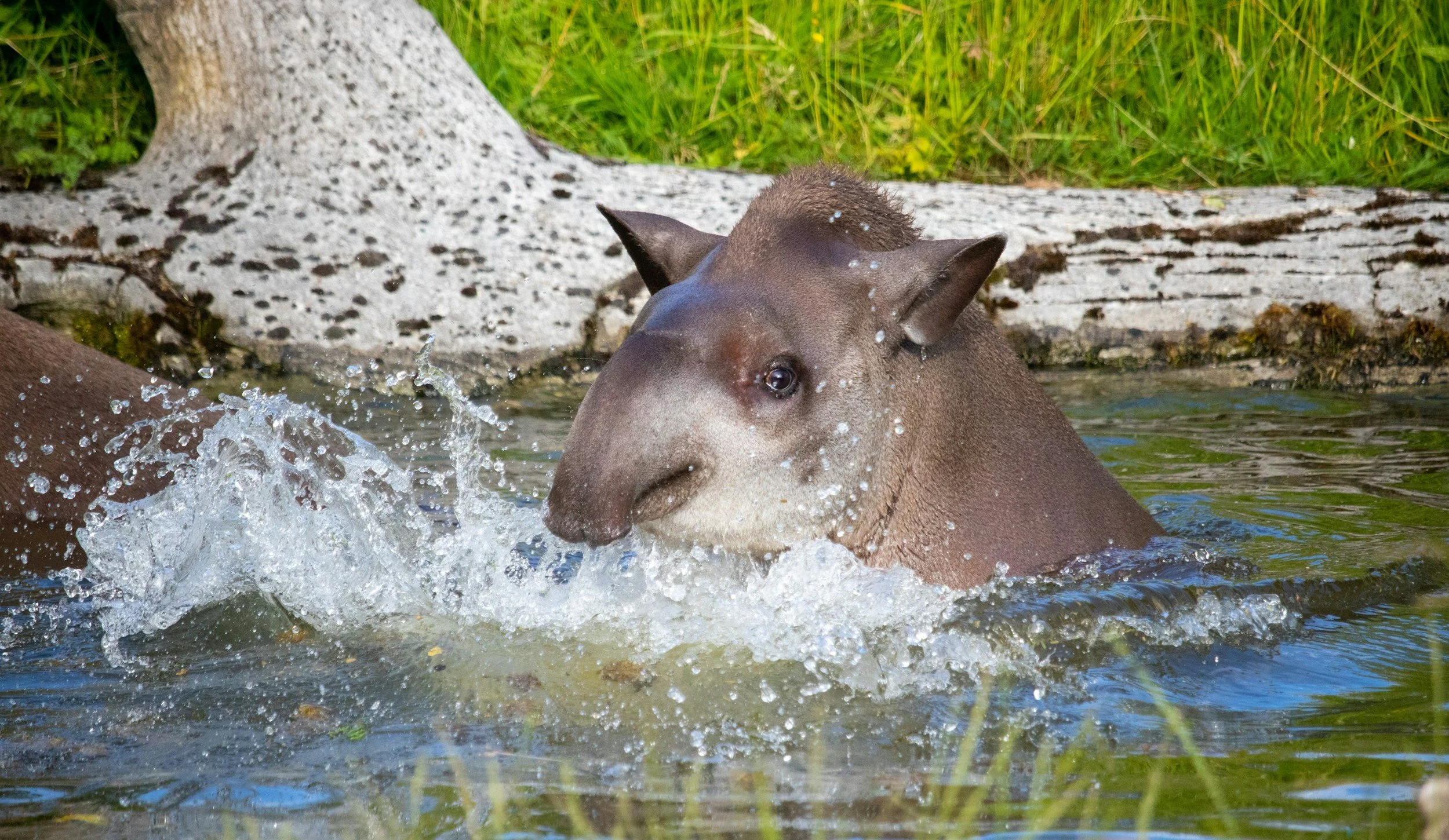
I make no secret of my preference for the base and profane. So when I learned about the unusual bathroom habits of the Costa Rican tapir while prepping for this week’s episode, I spent most of the interview on the hunt for an opportunity to bring it up. But I came up empty-handed and ham-fisted—Debi Nova, brimming with sensitivity and conversational aplomb, set up field biologist Esteban Brenes-Mora with topics more germane to my show’s format than I could have dreamed: Have you played music for the tapirs? Might their heightened sense of hearing allow for a preternatural experience with melody and harmony?
So, with the now-or-never urgency of a last-second half-court shot, I derailed us toward my pet issue, as it were.
If I had to guess, I’d have thought the water might help them relax—like a makeshift birthing pool of sorts. Turns out, tapirs prefer water for befoulment as a means of avoiding predation. The stream carries their scat away from their dwelling, dispersing the scent downstream so predators can’t easily track it back to where they rest—like a gravity-fed septic system. What’s more, they’re known to use shared latrines, sometimes going in groups. It reminded me of a 19th-century four-hole outhouse seat I found in my father-in-law’s barn, which, in his estimation, was designed so that “nobody has to wait!”
And when you consider the sheer volume of vegetation passing through a tapir in a day—up to 50 pounds of pure plant power—it’s no wonder field biologists like Esteban have ample opportunity to observe them at their most vulnerable.
Because these rhino relatives have such insatiable appetites for vegetation, they’re often described as gardeners of the forest. They carve out paths, disperse seeds across wide ranges, and create openings that allow sunlight to reach the forest floor—supporting regeneration and, in turn, carbon capture. So it’s no great leap to consider the tapir as having measurable effects on entire ecosystems.
But their resurgence isn’t without consequence. When a tapir wanders into a cucumber farmer’s field, the crop can be wiped out overnight—livelihoods undone by the same animal that, at scale, helps sustain the forest. What reads as restoration in one context is loss in another.
Esteban’s work sits directly in what he calls “the duality”—the balance of gain and loss inherent to conservation work. Rewilding isn’t just about bringing animals back—it’s about figuring out how those changes land with the people already there. In practice, that means tracking movement, understanding patterns, and working with local communities to reduce conflict where possible.
And in the case of the tapir, it means attention to the most granular details—the places they move, the paths they cut—and, for me, the pools they find most responsive to a good, honest slam.