
Dumb as Rocks: Gustav Fechner and the Lasting Popularity of Panpsychism

Ours is truly an exciting moment if a Caltech researcher like Daw An Wu can come on Sing For Science and claim alignment with the principles of panpsychism, which, in his words, “is to say that even a rock has consciousness…it just basically has nothing. There’s just almost no information in that consciousness.”
Though we didn’t dip our toes further into the consciousness whirlpool on our episode with Debbii Dawson, I’ll put forth here that I define consciousness as the quality of interiority—not self-awareness per se, but perhaps an active inner experience.
I’d become familiar with the increasing popularity of Daw An’s belief through Annaka Harris’s book, Lights On, where she investigates the claim that consciousness is a fundamental property of all matter. And to me, this idea is attractive mainly because it offered a bridge between the sometimes irreconcilable positions of the physicalist (all phenomena have a material form) and anyone who considers that what’s happening underneath the hood may be supernatural or immaterial in nature. The basic argument here is that if you do believe that humans share an attribute of consciousness with apes, dogs, cats, and down the line to a worm, then you can’t pinpoint exactly when the lights get turned off with simpler organisms and even atoms themselves. Framed as such, it becomes just as strange to me to see rocks as unconscious as it does to see them as conscious.
There’s nothing entirely new about any of this, either. The philosophy of panpsychism first emerged 200 years ago alongside the birth of psychophysics, the field of study that measures how the brain processes sensory input from the physical world. The godfather to both the field and the philosophy was German physician and physicist Gustav Fechner (1801–1887). Fechner’s journey from physics to panpsychism is so extraordinary it has the ingredients of a Greek epic: Having gone temporarily blind from self-experimentation staring at the sun, Gustav entered into a period of depression, only to emerge from it with a sort of inner vision that produced panpsychism. Fechner described his awakening as giving him perspective enough to see all matter as “alive” and his renewed outlook the “day view,” while his physicist’s and former understanding was the “night view.” A devout Christian, Fechner 2.0 came to define the divine as being a unifying collection of all consciousness that he described with this analogy: humans are to God what cells are to a human being.
And this, to me, is the big selling point. My Fechnerian-adjacent philosophy has always been that we and everything around us are far more connected than science has yet been able to measure.
Listen or Watch the Full Episode:
Fred Hampton and the Rainbow Coalition
No Green Room will reach its fullest expression until it can assume the shape of a planetarium.
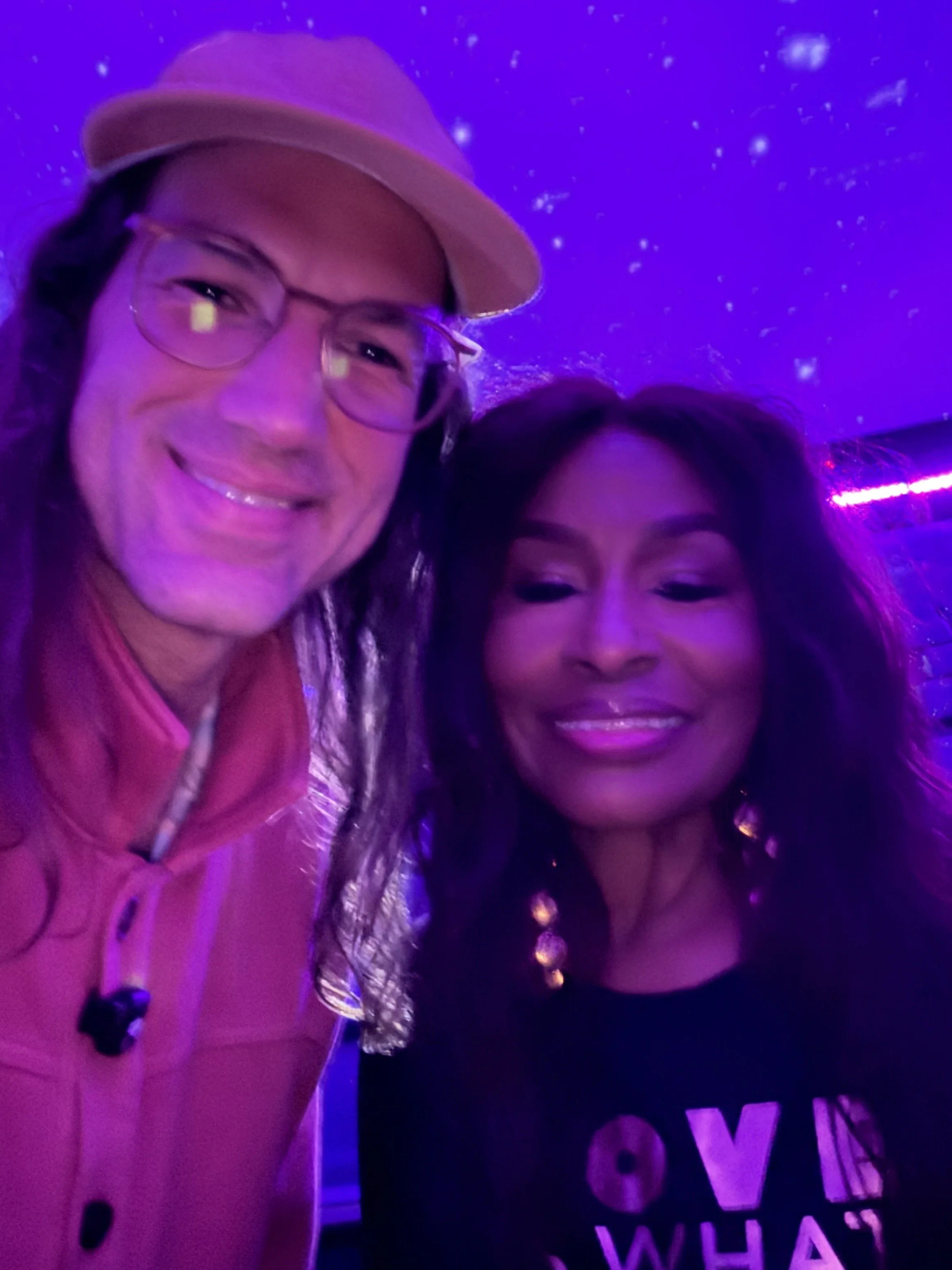
I’d yet to see a greater display of artist hospitality than what the Houston Museum of Natural Science put together for Chaka Khan’s taping of this week’s episode of Sing For Science. The Burke Baker Planetarium had been transformed into her private dressing room, complete with the night sky as it appeared on the day she was born projected across the dome and WELCOME CHAKA glittering overhead in a starry cluster.
This was the setting for our brief backstage conversation before Chaka joined neuroscientist Dr. Mei Rui onstage for our discussion about using music as medicine.
I can’t quite reconstruct how we got on the topic we did, as fifteen minutes inside a planetarium seems to warp one’s sense of time. Seated in the front row of an otherwise nearly empty dome, Chaka and I wound up talking about the chickens on her farm in Georgia, peppermint tea, and the Black Panther Party, and in a sequence I can’t reassemble.
When I first realized Chaka had been a Panther in Chicago during the late 1960s, I immediately began to wonder whether she’d known Fred Hampton. The timing and geography lined up, but it felt like a question that wasn’t likely to weave naturally into our onstage conversation, and one that shouldn’t be forced during our brief pre-show chat.
Then Chaka mentioned baking bread during her time with the Panthers.
“Did you know Fred Hampton?” I asked.
“Oh sure,” she replied without hesitation.
“He was my dear, dear friend. We used to bake bread together.”
And then, following the taping, down the rabbit hole I went.
Up until then, I’d had little more than flashcard-depth knowledge of Fred Hampton. Like many people, I knew him as the twenty-one-year-old leader of the Illinois Black Panther Party who was assassinated at the hands of Hoover’s FBI in the late 1960s. I also knew remarkably little about the Panthers themselves beyond the stock images of berets and rifles that tend to survive in popular memory.
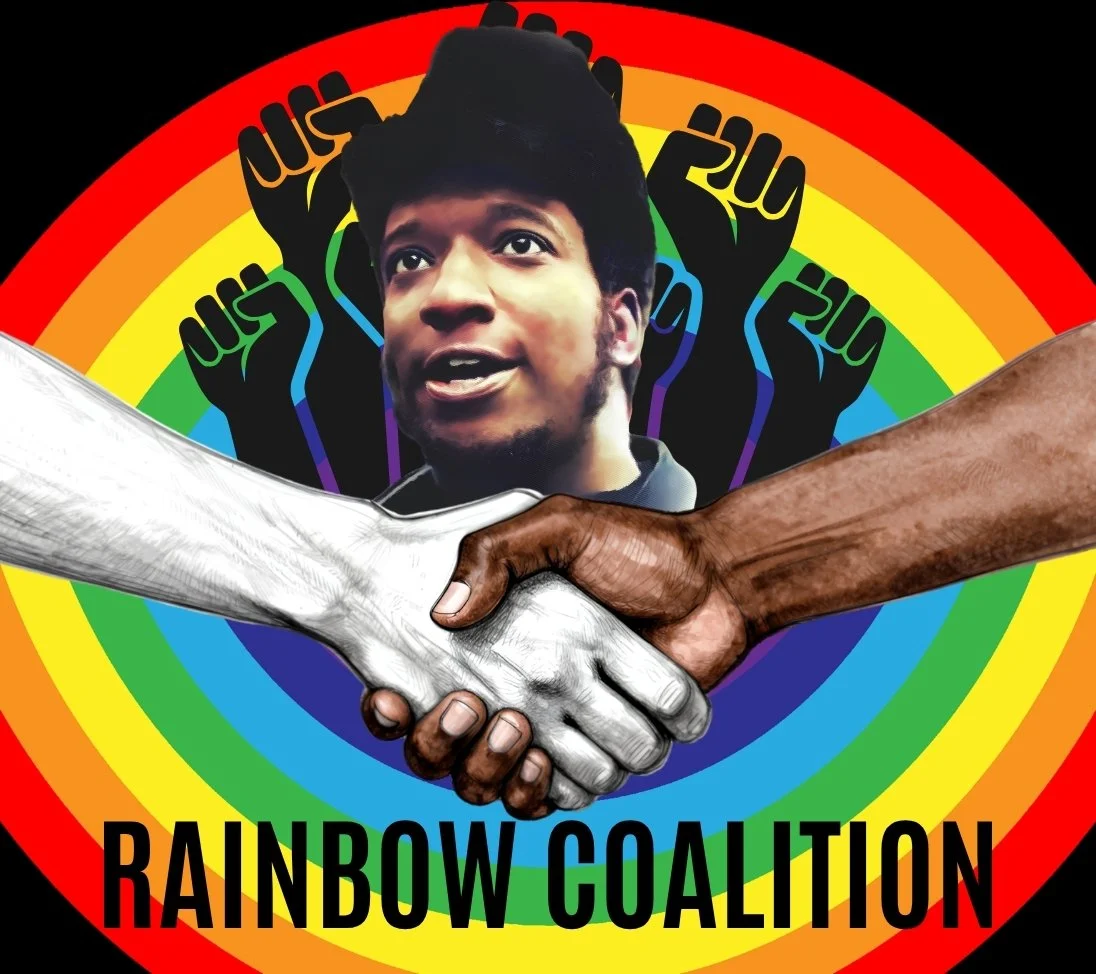
The more I read, the more vivid the picture became. I realized that the bread baking wasn’t the anecdotal detail it had initially seemed, but something integral to the movement itself. The Panthers’ survival programs included free breakfasts for children, community health clinics and educational initiatives alongside their political organizing. What I knew much less about was the Rainbow Coalition Hampton helped build, an alliance that brought together the Black Panthers, the largely Puerto Rican Young Lords, the Young Patriots Organization, whose members were mostly poor white migrants from Appalachia, and other community organizations around shared concerns like housing, healthcare and economic inequality.
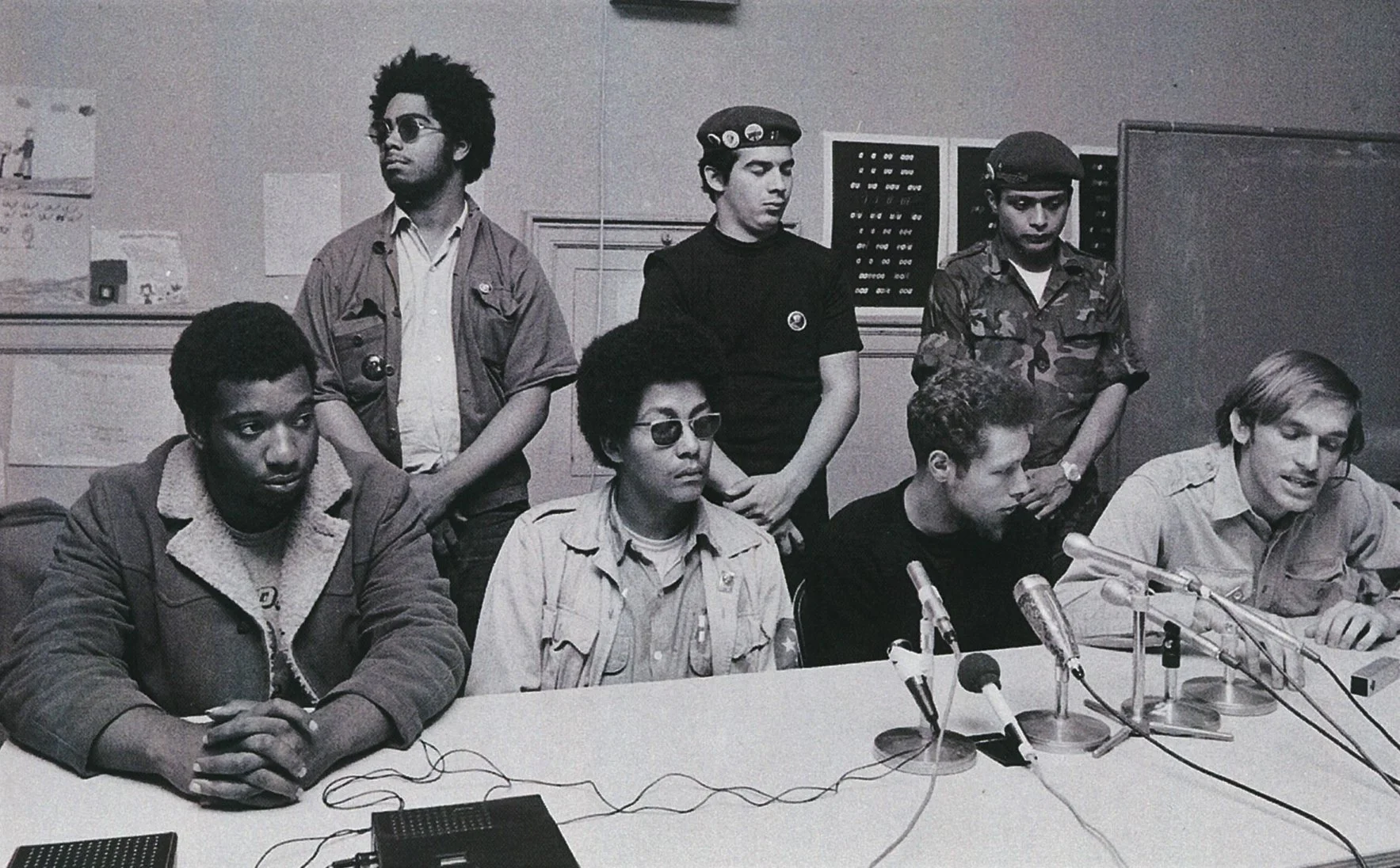
Reading about the Rainbow Coalition, I was struck by how tragically current it felt. Hampton wasn’t simply organizing across racial lines, he was organizing around class. His premise was that poor and working-class Americans had more in common with one another than the political establishment wanted them to believe.
That, in turn, reminded me of Martin Luther King Jr.‘s final years. By 1968, King had expanded his focus beyond civil rights toward economic justice, labor rights, and the Poor People’s Campaign. He, too, had begun organizing across racial lines around poverty and shared material conditions.
Whether that parallel is merely historical coincidence or something more is above my pay grade to assess. But it raises an eyebrow that two of America’s most compelling advocates for multiracial coalitions rooted in economic justice met such violent ends before either vision had much opportunity to mature.
Listen or Watch the Full Episode:


Thruple Scheduling

I’d never before felt so old as when I first saw Earl Sweatshirt’s debut video in 2011. Everything I knew of youth culture up until that moment had some reference point from my own experience to aid in sense-making, something around which I could wrap my grip and keep one foot in the game. But this was a watershed moment, a Rubicon to have crossed, a spacecraft from which to accidentally untether during routine exterior maintenance. It was as if seeing the Pinta and Santa María from the seashore having never before seen a ship, etc.
That was the benchmark for feeling old until my Brooklyn neighbor told me she was raising a child in a thruple. Suddenly making sense of when rap had become avant-garde to me was lightweight by comparison.
For fear of seeming the least bit Victorian, I stymied the flood of questions (How will the child address each of you? Who has sex with whom? Is the rent divided evenly?), moved upstate and summarily forgot all about it…
…Until this week’s episode of Sing For Science when I got to chat with Donnie Darko lead and singer-songwriter Jena Malone about polyamory alongside an expert who studies it. Dr. Amy Moors is a psychologist at Chapman University where she studies the evolving modalities of romantic relationships and how they’re perceived.
Jena’s journey with polyamory was inspired, at least in part, by her beginning to scrutinize our cultural hierarchy of relationships, where a monogamous marriage sits at the top and all else below. She shared with us a profound insight: “After the birth of my son I realized I’d never love another person as much as I love him.”
Jena points out that society exerts pressure on us to find one partner who can be our friend, lover, caregiver, co-parent, cheerleader, and everything else besides, while all other relationships take a backseat. Her lyric, I want to take the society out of you, she said, is perhaps the most loving thing a person could say to her.
Social constructs be damned, Dr. Moors pointed out that polyamorous or consensually non-monogamous people can experience something called compersion, where one person experiences joy from the fulfillment of their partner’s desires with another person.
Unable to wrap my head around the concept I found myself yet again without a map and took on the mantle of token fuddy-duddy when I offered up that it’s hard enough to maintain one relationship, let alone multiple.
Pressing further, I wanted answers to my aging questions about how a thruple might actually schedule their time with one another - Going on the math alone it’s at least 4x more complicated if not exponentially so. Amy responded: “A lot of people are not necessarily trying to replicate monogamy, …people who practice polyamory tend to be emotionally, sexually and romantically close to multiple people. …it’s a lot of communication around what they want and kind of making what lives in our head…reality and…amending things as you go on.”
But I needed more so turned to the robot with as plausible a hypothetical as I could come up with where I live:

Listen or Watch the Full Episode:

The Spirit of Radio and Authenticity as Lost Cause

Scholarship has its fair share of burdens, alright, and I’d venture to guess that for the philosopher kings of modern academia, experiencing life unencumbered by knowledge of what’s going on underneath the hood is chief among them. When I asked Gender and Performance Studies professor Dr. Ann Pellegrini on this week’s episode with Rita Wilson whether every component of how we operate in the world could be interpreted as performative, she replied: “I don’t mean to sound glib…but it’s performance all the way down.”
If nothing else, her take loosened my grip on the futile pursuit of authenticity in myself and others. But for Ann, I’d imagine that possessing such an in-depth understanding not just of what makes us tick, but how we tick, must require a kind of moment-to-moment recalibration while navigating the field of human relationships.
It was at the intersection of Ann’s gender research and performance studies scholarship that our conversation largely lived this week. “If we think about gender as performance,” she said, “we can think about all the social cues, all the social stereotypes about what it is to be an embodied subject… We’re taught how to do our bodies in a way that accords with the sex ascribed to us at birth.”
In Ann’s framing, because gender can be understood as performative, it is by extension a discipline, a craft we hone through social feedback. “We get rewarded if we do it right,” she said, “and we get chastened, sometimes more harshly than others, if we do it wrong.”
And perhaps as a rebuke to my suspicion that this perspective nullifies any chance at authenticity, Ann added: “That way you have to learn [gender], that we’re trained into it, doesn’t mean it’s false. In fact, it comes to feel very real.”
Our chat deviated quite spectacularly when I asked Ann whether, without the microphones in front of us, our conversation could still be classified as performance. That was the moment she delivered the line: “It’s performance all the way down.” But later, contemplating the instrument capturing our voices for the podcast, she pivoted toward something far more material: the gendered history of broadcast technology itself.
As Ann explained, early radio and recording technologies were designed primarily around lower-frequency male voices. Higher-frequency voices, more commonly associated with women, often lost clarity and definition within the bandwidth limitations of early broadcast systems. Engineers compensated by increasing the volume on women’s voices, but the result could sound brittle, piercing, or distorted. In other words, the technology itself helped cultivate the perception that women’s voices were shrill, emotional, or abrasive.
The science behind all this is a knotty intertwining of sexism, broadcast radio, government regulation, anatomy, and speech. With the proliferation of AM radio in the 1930s, signal interference became increasingly common because one station’s transmission often bled into neighboring frequencies on the dial. Congress responded by allotting fixed bandwidth ranges for broadcasters, most of whom then limited their signals to roughly 300–3400 Hz, what became known as “voiceband,” the minimum amount of information required to transmit speech intelligibly.
Not surprisingly, the largely male engineers and regulators behind these standards primarily optimized the technology around lower male vocal ranges.
A thing about speech: when you measure the frequencies of vowels and consonants, the consonants occupy higher ranges in both male and female voices. So it’s actually a fallacy that women’s voices are inherently less discernible than men’s. In many respects, they’re comparably intelligible to the human ear. But by boosting the volume to compensate for technical shortcomings, broadcasters inadvertently created a harsher listening experience, one that ultimately reinforced cultural perceptions that women sounded overly emotional or even hysterical.
And to this day, perhaps as a means of combating those perceptions, many women lower their voices, sometimes by as much as half an octave, only to then be criticized for sounding unnatural or inauthentic.
Now, it’s often said that a little knowledge is a dangerous thing, so with little more than a 45-minute primer on Gender and Performance scholarship, I’ll weigh in with this half-baked morsel: the confluence of gender bias and performance in recorded media creates a dizzying feedback loop in which authenticity becomes simultaneously overperformed and unrecognizable.
For more on sound, frequency, and acoustics, check out our episode with indie darling Mac DeMarco and acoustician Russ Berger.
Listen or Watch the Full Episode:
Australia’s Geology and the Unstoppable Evolution of the Praying Mantis
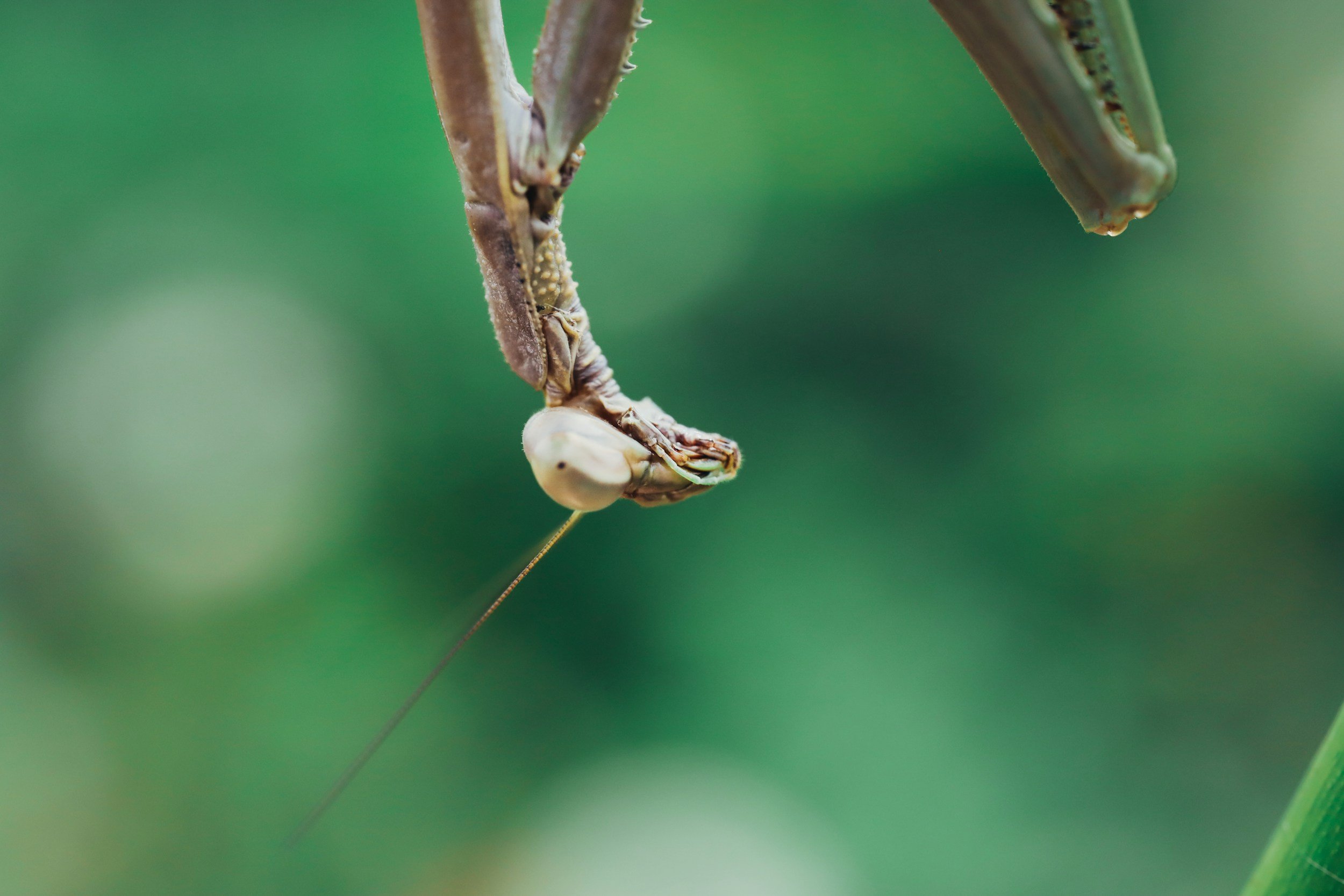
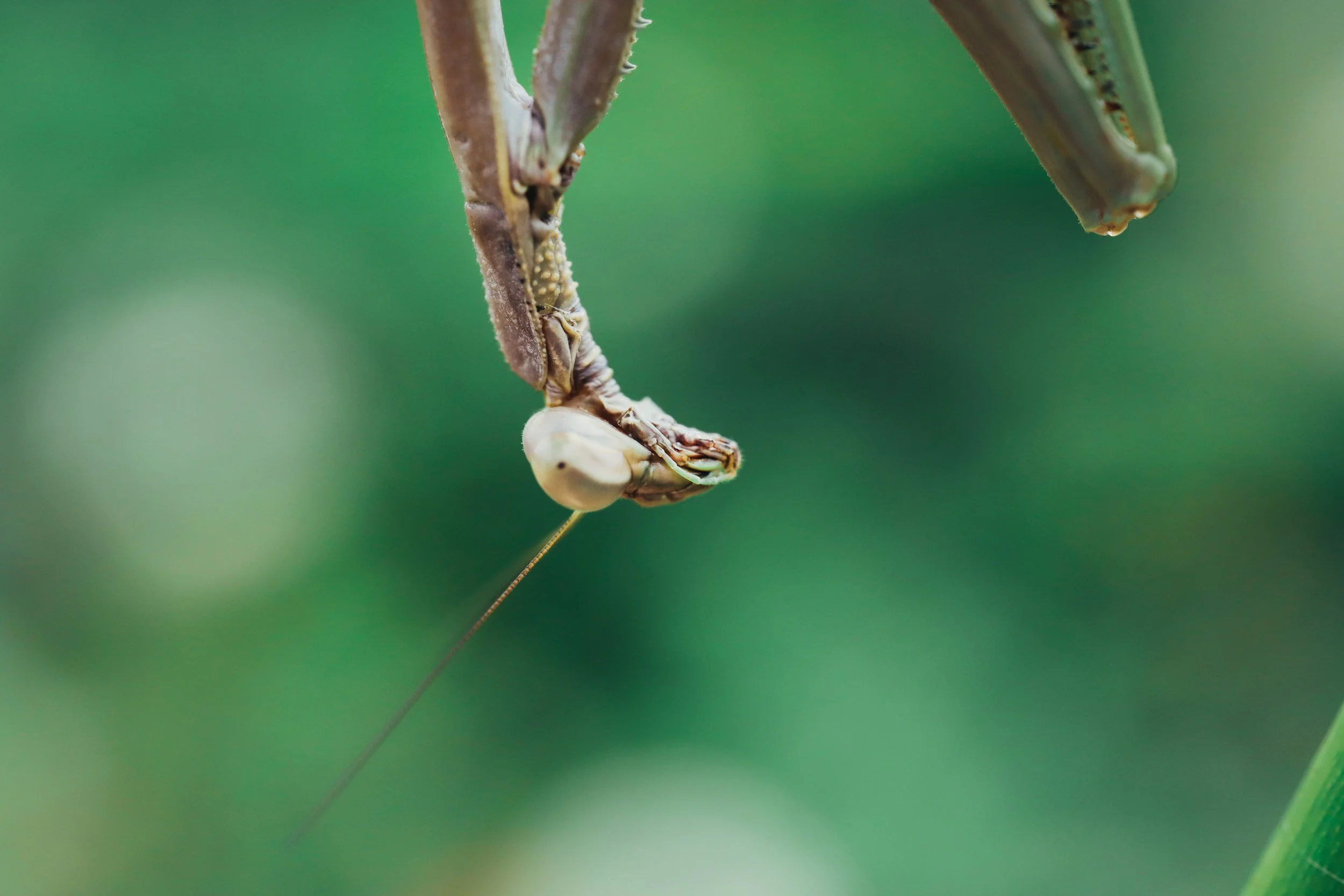
Mantises across the globe don’t always share a recent common ancestor, meaning evolution saw the mantis as a common solution many times. I for one find the implications of that unsettling—but no matter!
If I were to dismantle my most enduring assumptions about Australia, I’d likely uncover a source code populated entirely with early-career INXS lyrics. For most xennial Americans (b. 1977–1983), I’d imagine Mad Max was the primary reference—present company excluded, as I still haven’t seen it. But my hunch is that regardless of input, my generation has landed on the same felt sense: that Australia is unlike most places we know. So whether you had only a mulleted Mel Gibson desert drag racing to go on or a mulleted Michael Hutchence Dancing on the Jetty, we arrived at the same collective picture of Australia as remote, wild, and untamed.
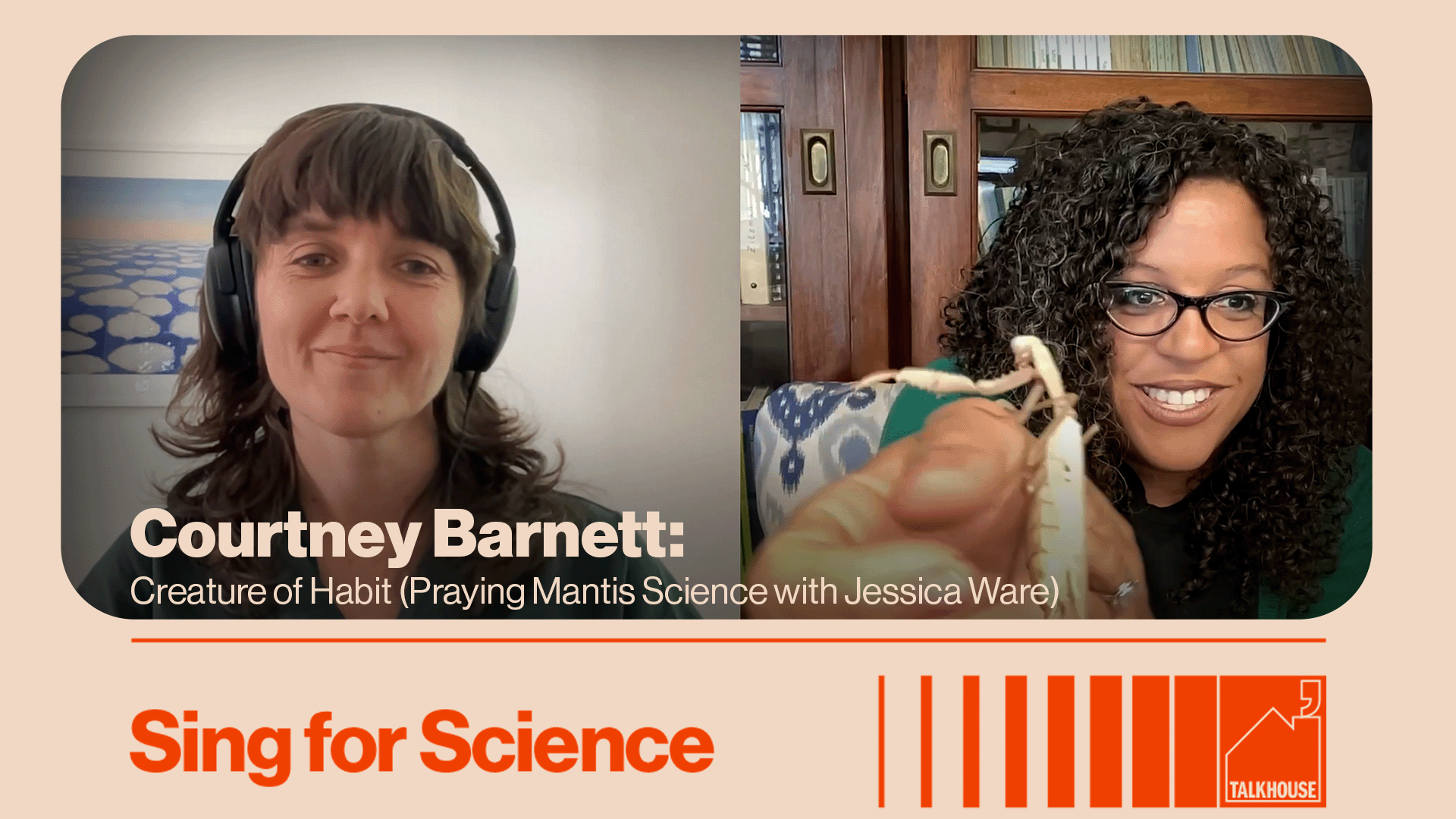
And from what I learned hosting this week’s episode of Sing For Science with Australian musician Courtney Barnett, the record of this planet’s geologic history bears that out. Though we’d assembled to talk about the manifold delights of the praying mantis, like most great scientists, our guest entomologist Dr. Jessica Ware was able to speak across disciplines, seamlessly moving from the very small (mantis neurons) to the very big (continental drift). I’d asked her to dwell on the latter because my geo-knowledge has a sizable gap between when we were without borders (Pangea) and today.
Here’s how we got there:
Courtney Barnett:
“Mantises adapt to the space that they’re around?”
Jessica Lee Ware:
“Yes, over long periods of time. Mantises are pretty old. So some of them are on all the continents, some of them are on some of the continents. Some of them evolved when the continents were smushed together into a big giant southern continent and a big northern continent—Laurasia and Gondwana. So they’ve moved around.”
Matt Whyte:
“Can you back up? I don’t know, to before the land masses broke apart. What were the names?”
Jessica Lee Ware:
“There was one giant landmass, Pangaea, and it started breaking apart into fragments. Initially it broke into a northern one, Laurasia, which became Canada and Europe and Asia. And then there was a southern one, which was South America, Africa—parts of Australia were attached there for part of it—and Antarctica. And that Gondwanaland was generally south of Laurasia.
And so a lot of times you have taxa that are found in both Europe and North America, but it’s not because they’re moving across the ocean—it’s because they evolved when those two continents were together before they broke apart. And then the species just traveled with the continents as they broke apart into North America and Eurasia.”
Perhaps the most provocative takeaway is that mantises across the globe don’t always share a recent common ancestor, meaning evolution saw the mantis as a common solution many times. I for one find the implications of that unsettling—but no matter!
It looks as though going back 100 million years Australia has always had a rogue quality: breaking from Antarctica in pursuit of sunnier climes, or, say, instituting a mandatory semi-automatic buyback program in response to its first and only mass shooting for 30 years. And if I hadn’t already made my fondness for Oz abundantly clear, know that I can derail most conversations with any Australian in seconds toward INXS. My down-under interlocutors are always polite but don’t exhibit the same hometown hero reverence I’m expecting. (Courtney flashed a warm but narrow smile when I showed her my 1988 Calling All Nations tour program.)
Since I clearly can’t be trusted to stay on topic, I’ll wrap with this: around 50 million years ago, Australia and its undergirding plate started moving north, further isolating itself and evolving plant and wildlife that most Americans would regard as science fiction. Of course, its sensible gun laws and waterproof cash do little to disabuse us of the impression.
Listen or Watch the Full Episode:

Why Do Tapirs Eliminate in Water?
Turns out, tapirs prefer water for befoulment as a means of avoiding predation. We had to ask tapir expert, Esteban Brenes-Mora, why in our conversation with Costa Rican star Debi Nova.

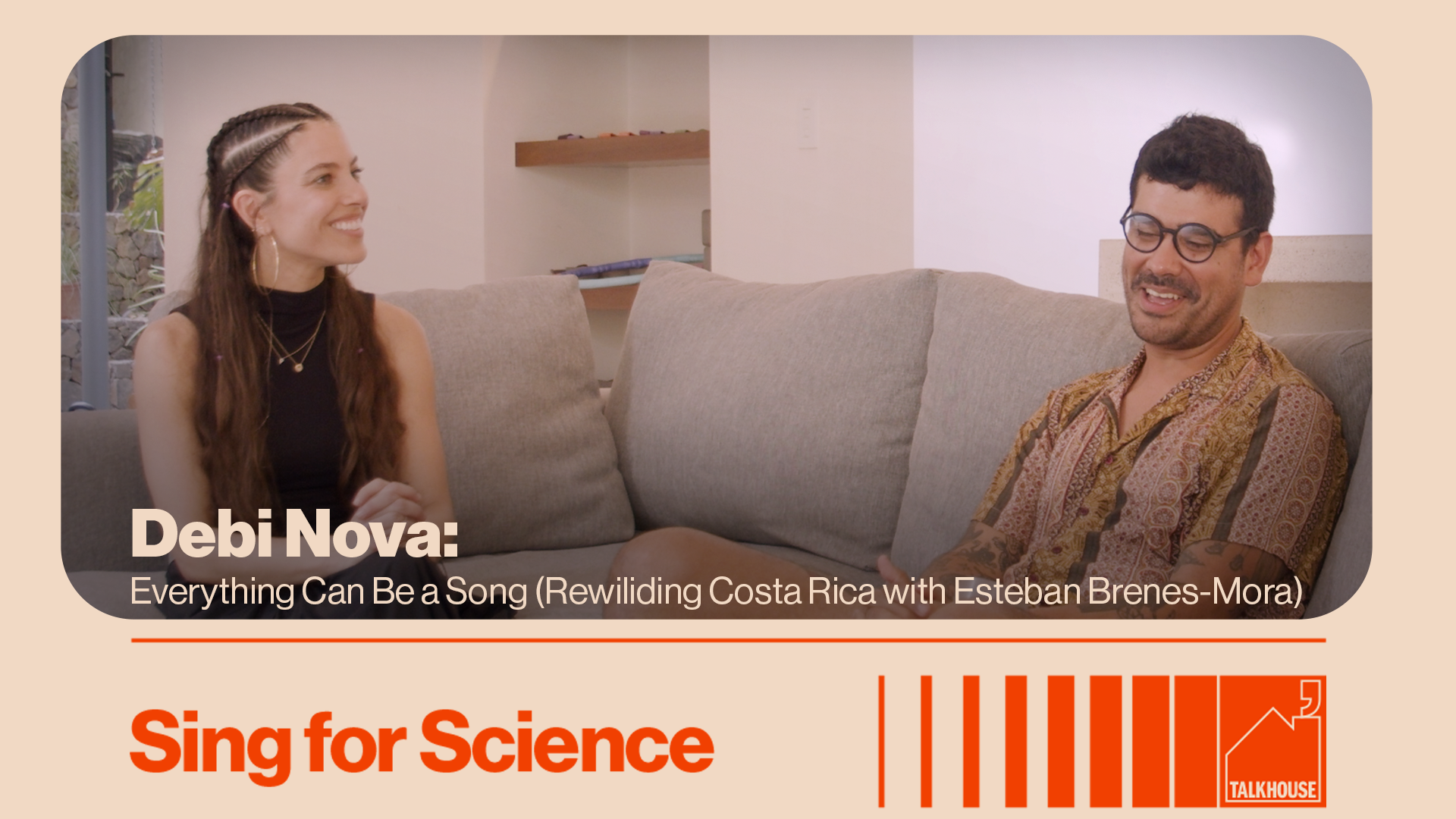
I make no secret of my preference for the base and profane. So when I learned about the unusual bathroom habits of the Costa Rican tapir while prepping for this week’s episode, I spent most of the interview on the hunt for an opportunity to bring it up. But I came up empty-handed and ham-fisted—Debi Nova, brimming with sensitivity and conversational aplomb, set up field biologist Esteban Brenes-Mora with topics more germane to my show’s format than I could have dreamed: Have you played music for the tapirs? Might their heightened sense of hearing allow for a preternatural experience with melody and harmony?
So, with the now-or-never urgency of a last-second half-court shot, I derailed us toward my pet issue, as it were.
If I had to guess, I’d have thought the water might help them relax—like a makeshift birthing pool of sorts. Turns out, tapirs prefer water for befoulment as a means of avoiding predation. The stream carries their scat away from their dwelling, dispersing the scent downstream so predators can’t easily track it back to where they rest—like a gravity-fed septic system. What’s more, they’re known to use shared latrines, sometimes going in groups. It reminded me of a 19th-century four-hole outhouse seat I found in my father-in-law’s barn, which, in his estimation, was designed so that “nobody has to wait!”
And when you consider the sheer volume of vegetation passing through a tapir in a day—up to 50 pounds of pure plant power—it’s no wonder field biologists like Esteban have ample opportunity to observe them at their most vulnerable.
Because these rhino relatives have such insatiable appetites for vegetation, they’re often described as gardeners of the forest. They carve out paths, disperse seeds across wide ranges, and create openings that allow sunlight to reach the forest floor—supporting regeneration and, in turn, carbon capture. So it’s no great leap to consider the tapir as having measurable effects on entire ecosystems.
But their resurgence isn’t without consequence. When a tapir wanders into a cucumber farmer’s field, the crop can be wiped out overnight—livelihoods undone by the same animal that, at scale, helps sustain the forest. What reads as restoration in one context is loss in another.
Esteban’s work sits directly in what he calls “the duality”—the balance of gain and loss inherent to conservation work. Rewilding isn’t just about bringing animals back—it’s about figuring out how those changes land with the people already there. In practice, that means tracking movement, understanding patterns, and working with local communities to reduce conflict where possible.
And in the case of the tapir, it means attention to the most granular details—the places they move, the paths they cut—and, for me, the pools they find most responsive to a good, honest slam.
Listen or Watch the Full Episode:

Sing for Science Just Won a Webby
Sing for Science just took home a Webby Award for Best Live Podcast Recording for our episode with Kacey Musgraves and Paul Stamets on Magic Mushrooms.

Sing for Science has been awarded a Webby Award for Best Live Podcast Recording!
The honor recognizes our live taping with Kacey Musgraves and mycologist Paul Stamets, recorded at the Ryman Auditorium in Nashville.
The conversation moves from mushrooms to consciousness to the hidden systems that shape how we live—an exchange that reflects what the series does at its best: bringing artists and scientists together in a setting where ideas can unfold in real time.
Stamets describes mycelium as “nature’s internet”—a vast, underground network connecting ecosystems. Musgraves brings that idea back to the human scale, reflecting on how learning reshapes our sense of connection. The result is less a traditional interview than a shared inquiry.
The Webby Awards, established in 1997, recognize excellence across the internet. For Sing for Science, the award affirms an approach that has guided the show from the beginning: pairing musicians and scientists not to simplify ideas, but to expand them.
Since its launch, the series has grown into a platform for conversations that move fluidly between art and research, often in front of live audiences in spaces like the Ryman Auditorium, the New Museum, and the Museum of Science in Boston.
We look forward to seeing you in your city in the very near future.
Listen or Watch the Full Episode:


A Brief & Partial History of Skinheads In Punk
Being in the punk scene for decades, Dropkick Murphys’ Ken Casey delivered a lesson on punk rock subculture: from the ‘60s to the White House.
Last week on Sing For Science, Dropkick Murphys singer Ken Casey talked with Dr. Phillip Atiba Solomon about the band’s song “Citizen I.C.E.” and how music can push against (or for) dehumanization. Being in the punk scene for decades, Casey delivered a lesson on punk rock subculture: from the ‘60s to the White House.
Neo-Nazi skinheads in the punk scene were once—surprise, surprise—disenfranchised white working-class youth, ultimately weaponized by the far-right UK political party, the National Front. In the late 1960s, skinhead culture emerged in London when Jamaican immigrants introduced young Britons to ska, rocksteady, and early reggae. Ironically, what would later become associated with white supremacy was, at its core, multiracial.
Culture is as fluid as it is porous and as economic strain intensified in the 1970s, political groups began to recognize that youth culture was ripe for exploitation. The National Front seized that opportunity, recruiting within punk and skinhead scenes, targeting young people already searching for belonging. Shows became not just cultural gatherings, but recruiting grounds.
What had been built around shared musical influence and community—the same inclusive inertia that, when left untouched, allows cultures to commingle and blend—was, in part, redirected toward exclusionary politics. Not entirely, and not without resistance in the punk scene, but enough to reshape how all skinheads were seen, both from within and without.
This pattern of fracture and division isn’t unique to one place or one moment, and Casey has had a front-row seat as present-day politics have divided his band’s mostly working-class fan base over the last ten years.
Casey says, “Of course, that spread to America. And you had the real punk rockers and real skinheads who were mortal enemy number one, racist skinheads, because it made them look bad… Our shows in the early days were the meeting spots for those two groups to the fight, and they were also the meeting spots for, sometimes when we were loading in our gear for the Nazis to show up.”
Dropkick Murphy’s new song, “Citizen I.C.E.,” is not unrelated. It’s about systems that create an “us” and “them” mentality. How dangerous things can become when those categories begin to calcify. You don’t have to look beyond punk itself to see how it happens. The history of skinhead culture offers a case study in how music builds community, community shapes identity, and identity can be co-opted.
“Now I say to people when they talk about Nazis in the scene, I go, they're not in the music scene anymore. We're small potatoes,” said Casey. “They're on college campuses, they're in the White House. They don't have to bother with disenfranchized youth in a punk rock show anymore.”
The groups that targeted these youth movements didn’t create something new from nothing. They stepped into an existing network of trust, built through music, style, and shared experience, then repurposed it.