Australia’s Geology and the Unstoppable Evolution of the Praying Mantis
If I were to dismantle my most enduring assumptions about Australia, I’d likely uncover a source code populated entirely with early-career INXS lyrics. For most xennial Americans (b. 1977–1983), I’d imagine Mad Max was the primary reference—present company excluded, as I still haven’t seen it. But my hunch is that regardless of input, my generation has landed on the same felt sense: that Australia is unlike most places we know. So whether you had only a mulleted Mel Gibson desert drag racing to go on or a mulleted Michael Hutchence Dancing on the Jetty, we arrived at the same collective picture of Australia as remote, wild, and untamed.
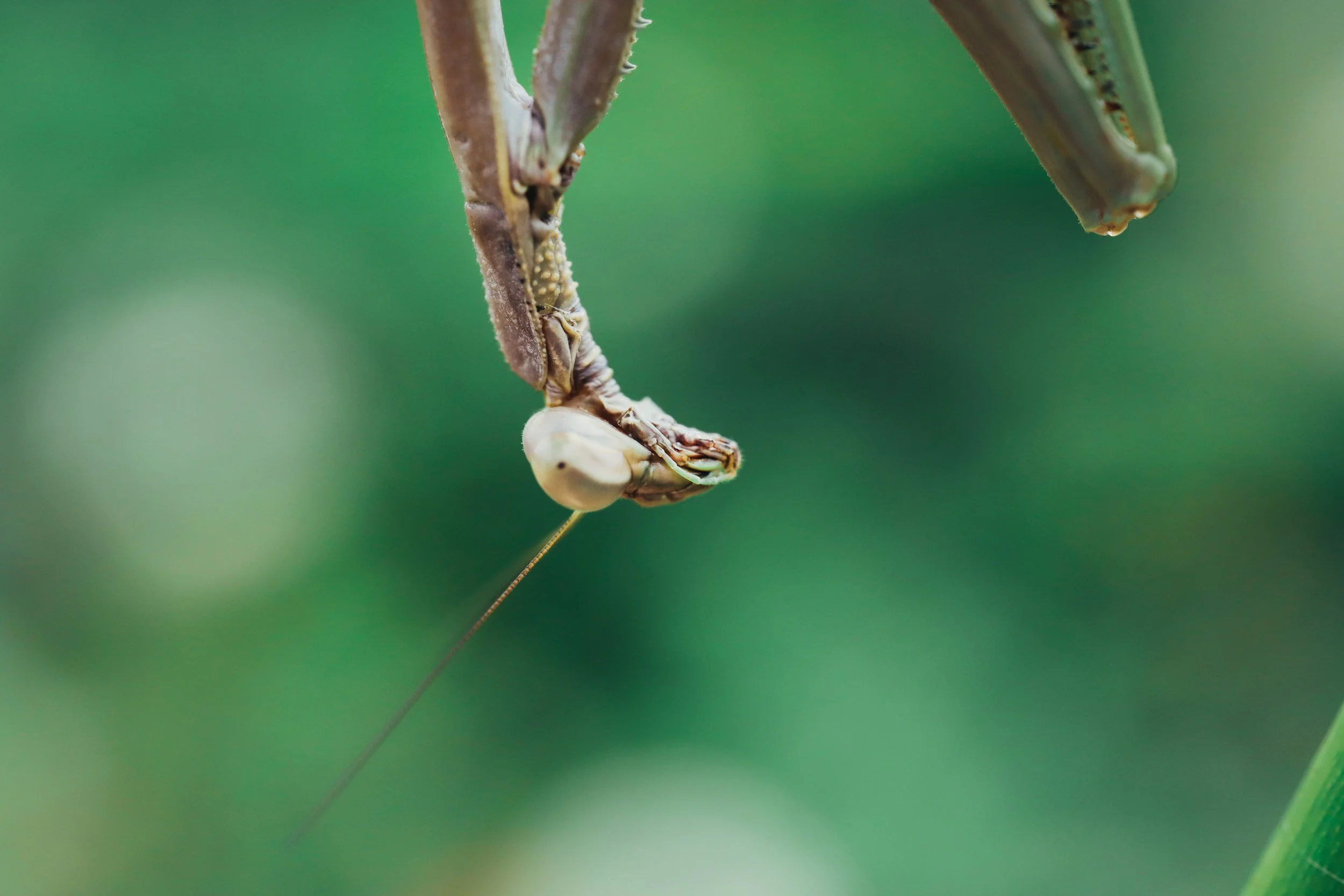
And from what I learned hosting this week’s episode of Sing For Science with Australian musician Courtney Barnett, the record of this planet’s geologic history bears that out. Though we’d assembled to talk about the manifold delights of the praying mantis, like most great scientists, our guest entomologist Dr. Jessica Ware was able to speak across disciplines, seamlessly moving from the very small (mantis neurons) to the very big (continental drift). I’d asked her to dwell on the latter because my geo-knowledge has a sizable gap between when we were without borders (Pangea) and today.
Here’s how we got there:
Courtney Barnett:
“Mantises adapt to the space that they’re around?”
Jessica Lee Ware:
“Yes, over long periods of time. Mantises are pretty old. So some of them are on all the continents, some of them are on some of the continents. Some of them evolved when the continents were smushed together into a big giant southern continent and a big northern continent—Laurasia and Gondwana. So they’ve moved around.”
Matt Whyte:
“Can you back up? I don’t know, to before the land masses broke apart. What were the names?”
Jessica Lee Ware:
“There was one giant landmass, Pangaea, and it started breaking apart into fragments. Initially it broke into a northern one, Laurasia, which became Canada and Europe and Asia. And then there was a southern one, which was South America, Africa—parts of Australia were attached there for part of it—and Antarctica. And that Gondwanaland was generally south of Laurasia.
And so a lot of times you have taxa that are found in both Europe and North America, but it’s not because they’re moving across the ocean—it’s because they evolved when those two continents were together before they broke apart. And then the species just traveled with the continents as they broke apart into North America and Eurasia.”
Perhaps the most provocative takeaway is that mantises across the globe don’t always share a recent common ancestor, meaning evolution saw the mantis as a common solution many times. I for one find the implications of that unsettling—but no matter!
It looks as though going back 100 million years Australia has always had a rogue quality: breaking from Antarctica in pursuit of sunnier climes, or, say, instituting a mandatory semi-automatic buyback program in response to its first and only mass shooting for 30 years. And if I hadn’t already made my fondness for Oz abundantly clear, know that I can derail most conversations with any Australian in seconds toward INXS. My down-under interlocutors are always polite but don’t exhibit the same hometown hero reverence I’m expecting. (Courtney flashed a warm but narrow smile when I showed her my 1988 Calling All Nations tour program.)
Since I clearly can’t be trusted to stay on topic, I’ll wrap with this: around 50 million years ago, Australia and its undergirding plate started moving north, further isolating itself and evolving plant and wildlife that most Americans would regard as science fiction. Of course, its sensible gun laws and waterproof cash do little to disabuse us of the impression.